
Overview
McMaster’s brand lives in the stories we share. Each story we create is an opportunity to showcase McMaster to the world.
Our tone should be authentic, optimistic and hopeful. The stories we tell should build upon our brand story and inspire our audiences to create a brighter world.
In this section, you’ll have access to brand tone and voice notes, Brighter World storytelling principles, and a full editorial style guide.
Information Box Group
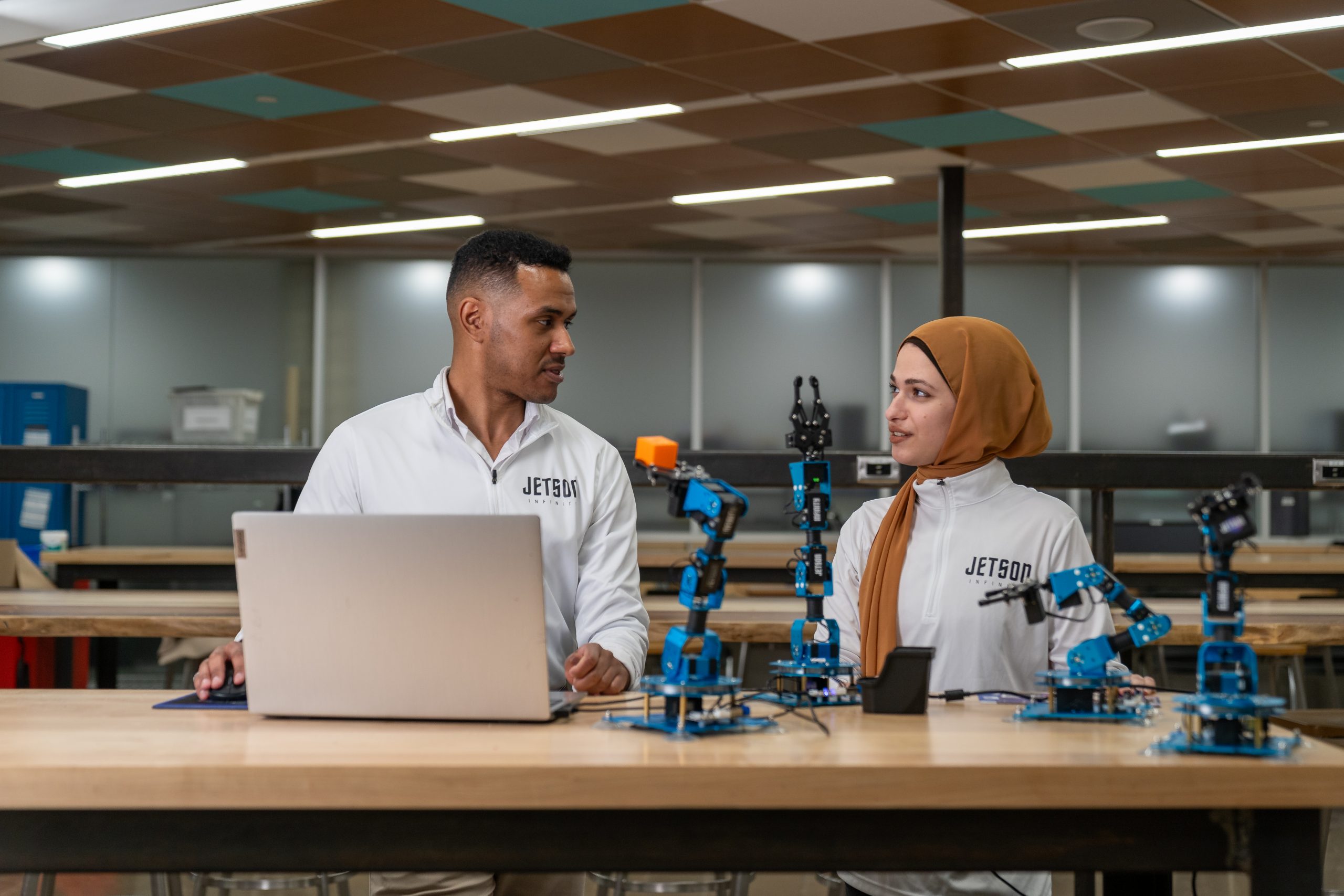
Emphasize impact
When crafting a story, emphasize how the person you are writing about is having an impact in the world. Each story should clearly outline why the readers should care. Don’t be afraid to ask yourself, “So what?” throughout the writing and review process.
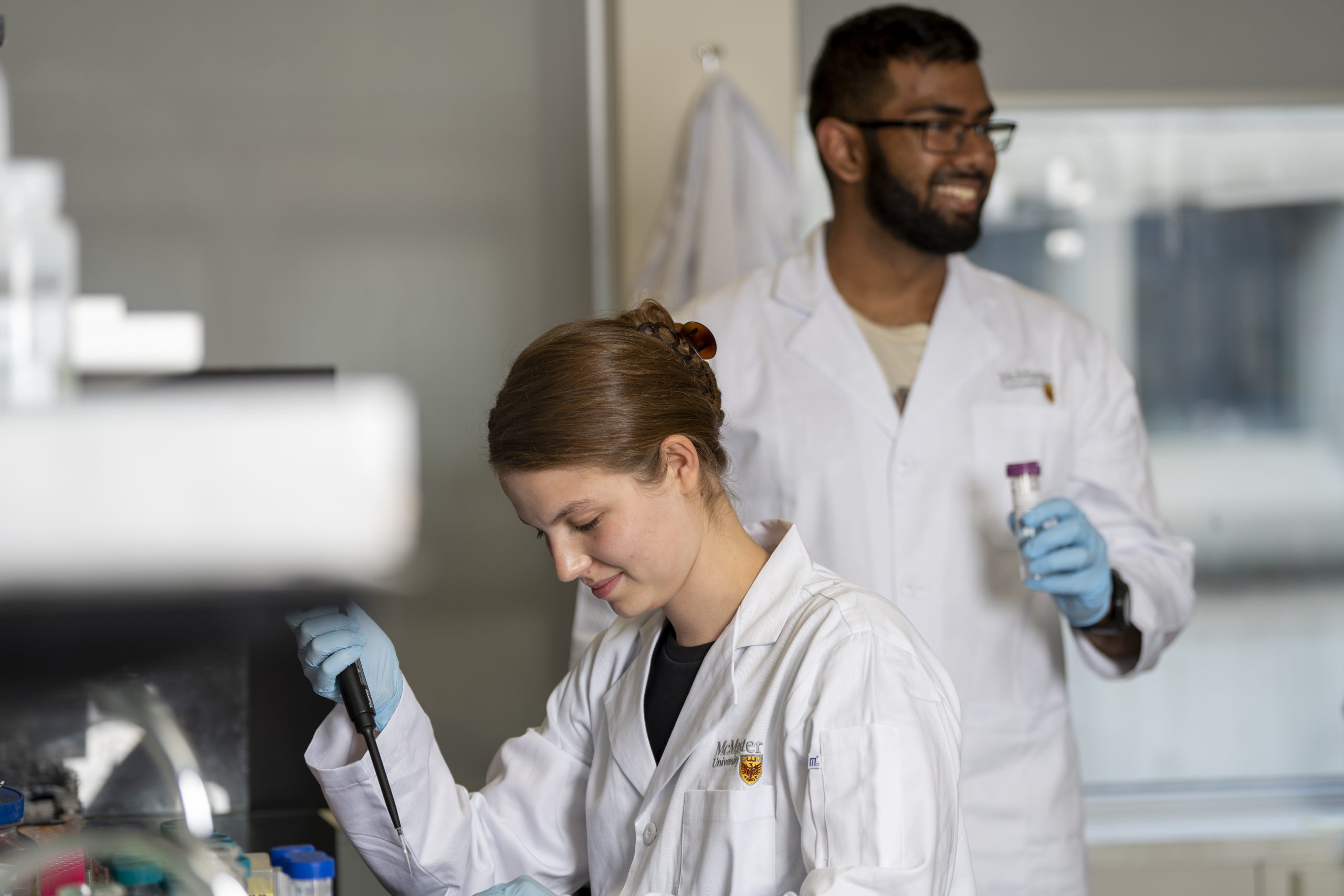
Be authentic
Authenticity allows people to see themselves in our storytelling and affirms to the community that everyone belongs here. Our stories should represent the people and the institutions at the heart of them in an authentic way.

Use plain language
Clear, concise and accessible writing is fundamental to the Brighter World brand. Whether you’re writing about the latest research discovery, a new piece of technology or a student-led initiative, tell the story in a way that audiences will understand.
Brand resource library
Our searchable library of tools and templates includes logo, templates, photography and video files.
Brand story
Authentic. Optimistic. Hopeful. McMaster.
It’s tempting to hope that a few brilliant minds will lead us to a brighter world.
But that’s not the McMaster way. We know that transformative change happens when everyone is included. Excellence is not a solitary act. At McMaster it’s a collective art.
McMaster encourages students to reach beyond traditional boundaries to better understand their potential and the world’s complex challenges. A brighter future for all means McMaster students are prepared for lives of purpose and leadership. They learn the value of community from the start with opportunities in laboratories, research groups, workplaces, design studios and startup incubators.
Our university invented problem-based learning, the McMaster method, which continues to transform education globally. We are also the birthplace of evidence-based medicine, a revolution in care that is one of the most important medical advances of our time. Our nuclear research produces isotopes to treat cancer and brings the promise of cleaner energy for all. Students and faculty come to McMaster to build on our global leadership in research that deeply impacts people, communities and our planet.
We welcome students, faculty, and staff from across the country and around the world to Hamilton – a city, like us, overflowing with ambition. McMaster’s diverse teams collaborate with partners beyond our campus borders.
We are determined to advance human and societal health and well-being for all. It’s a bold vision where people with diverse talents work together to solve important challenges and build a brighter world.
Brand voice and tone
McMaster University speaks consistently across all print and digital communications — from websites to e-newsletters and advertising. This voice embodies McMaster’s distinct identity as a place of discovery, collaboration, excellence and inclusiveness, focusing on our impact here and around the world.
Expandable List
Our tone varies depending on the audience. For example, a more conversational tone is used for social media, vivid adjectives and verbs for promotional copy, a direct, straightforward tone for web copy, and a more formal tone for official documents.
- Optimistic: Use an authentic voice to highlight solutions and subjects.
- Direct: Avoid unnecessary wordiness, jargon or hyperbole. Concise wording is more powerful.
- Warm and student-focused: Use first and second-person language (“we,” “you,” “us”) and contractions when appropriate.
- Impact-focused: Share the impact or potential impact our community contributes to a brighter future.
- Team-focused: Where possible, put individual accomplishments in the context of a team effort. Avoid a “hero worship” approach and, instead, acknowledge the efforts of the group, community or faculty that helped make the accomplishment possible.
With the above guidelines in mind, you might use expressions like “drive change,” “transform communities” — active, impact-focused, brief.
These keywords are useful to keep in mind when drafting headlines, advertising copy and titles:
Nouns
- Community
- Excellence
- Ideas
- Impact
- Leadership
- Partnership
- Solutions
Verbs
- Adapt
- Build
- Create
- Collaborate
- Connect
- Develop
- Discover
- Engage
- Explore
- Foster
- Ignite
- Improve
- Inspire
- Lead
- Protect (resources)
- Reinvent
- Shape
- Strive
- Transform
Adjectives
- Collaborative
- Creative
- Diverse
- Engaging
- Global
- Inclusive
- Innovative
- Insightful
- Inspiring
Storytelling Principles
Everyone loves a good story. While our communications are rich with data, graphics, images, and animations, we always look for ways to wrap facts within a story that builds an emotional connection with our audiences.
Our storytelling highlights the real-world impact of McMaster’s research, teaching and community service. We emphasize how our students, faculty, alumni and staff are improving people’s lives here and worldwide. Our stories include, and sometimes lead with, the perspectives of people whose lives have been changed by McMaster’s ambitious goal of advancing health and well-being for all.
Here are the principles that make a Brighter World story.
Expandable List
While our Brighter World brand allows us to share stories of excellence and optimism, our audiences connect deeply with stories that include the challenges we overcome. Even the most accomplished among us experience setbacks. Our storytelling can embrace the obstacles that happen when creating a better future. Authenticity lets more people see themselves in our storytelling and reminds us that everyone belongs here.
Our storytelling intentionally engages with diverse peoples, perspectives, and ways of knowing. We recognize that diversity strengthens our storytelling: Better outcomes and more significant impact are achieved when diverse perspectives from our students, faculty, alumni and staff are amplified. Our storytelling is responsive to the distinct needs of equity-deserving communities as we work to build a sense of belonging and celebrate excellence.
Collaborating with people from different backgrounds leads to developing richer multimedia stories that consider more perspectives. We look to faculty, students, alumni and staff to ensure we are building on our community’s storytelling talent. Collaborating with others allows us to lean into our strengths while providing opportunities for growth and building a larger community of storytellers.
McMaster has a rich history of innovation that continues to affect people’s lives here and around the world. While our storytelling highlights research discoveries and excellence, we are always looking for points of connection to our history. Whether it is our proud tradition of learning innovations, research discoveries, or better care through evidence-based medicine, our storytelling includes the context that answers the question: Why here? Why now? What is unique about this? These elements in our stories help audiences understand what differentiates McMaster from other institutions in Canada and globally.
Our communications remain focused on a brighter future through storytelling that showcases the ways we are creating healthier societies and a more sustainable world. Our stories are beacons of hope at a time when society’s challenges demand complex, evidence-based solutions.
Looking to write a Brighter World story? Use this checklist as a guide:
- Does the story connect to McMaster’s vision of advancing human and societal health and well-being?
- Does the story clearly demonstrate how McMaster students, faculty, alumni or staff are making a positive impact in society?
- Does the story include a diverse range of perspectives affected by McMaster research, education, or service?
- In our efforts to be authentic, is the story true to the experiences of the person being featured?
- Does the story answer the question: “Why McMaster?” How can the story be tied to McMaster’s history, culture and institutional strengths?
- Does the story highlight one of McMaster’s strategic priorities:
- Inclusive excellence
- Teaching and Learning
- Research and scholarship
- Engaging local, national, Indigenous, and global communities
- Operational excellence
Editorial style guidelines
Clear, consistent and compelling writing is essential to the Brighter World brand.
Using the Brighter World brand in your writing
Your writing should reflect the following elements of the Brighter World voice:
- Optimistic
- Direct
- Team-focused
- Clear and straightforward
- Warm
- Student-focused
- Impact-focused
Expandable List
- Brighten your language. For example, use “we,” “us” and “our” when referring to McMaster, rather than “they,” “it” and “its.”
- Use plain language. Say “use” rather than “utilize.” Why write “in the event of,” when you can write “if”? You don’t have to “attempt” anything new, just “try” it.
- Make your writing warm and story-driven, rather than corporate and institutional.
- Uppercase Brighter World if referring to McMaster’s brand. Otherwise, lowercase:
- McMaster launched the Brighter World marketing communications campaign in 2017.
- We are dedicated to creating a brighter world for all.
- Use sentence case for your headings:
- NO: McMaster Unveils a New Editorial Style Guide
- YES: McMaster unveils a new editorial style guide
- Left-align your text with a ragged right edge. Don’t centre. Don’t justify.
- McMaster always has a lowercase “c” even when capitalized: McMASTER.
- Don’t split the word “McMaster” over a line break.
- Advancing human and societal health and well-being.
- Note our Brighter World brand uses “well-being” with a hyphen
Academic degrees
- Lowercase university degrees, except when abbreviated:
- bachelor of commerce, BCom; master of arts, MA; doctor of philosophy, PhD
- Don’t add the word “degree” after the abbreviation. That is, don’t write “BA degree.”
- Don’t use periods in academic degree abbreviations, for example: BA, BEng, BCom, BArtsSc, MSc, PhD, etc.
Alma mater
- Meaning: the university, school or college one attends or attended.
- Don’t use italics.
Alumna, alumnae, alumnus, alumni
- alumna = one female graduate.
- alumnae = more than one female graduate [modern English pronunciation: “alumn-ee”].
- alumnus = one male graduate.
- alumni = more than one male graduate, or a group of male and female graduates [modern English pronunciation: “alumn-eye”].
- Don’t use “alum.”
- Gender-neutral alternatives: graduate(s) or grad(s).
Arts & Science Program
- Use an ampersand [&].
- Note that it spans two Faculties: Humanities and Science.
- “Artsci” is the abbreviation used by the program.
- The degree is BArtsSc.
Board of Governors
- Capital B and G when referring to McMaster’s Board of Governors.
- Lowercase on subsequent references: the board.
Bourns (no e)
- Arthur Bourns, president and vice-chancellor from 1972–1980.
Convocation vs. graduation
- Convocation is a formal ceremony that celebrates students’ accomplishments.
- Graduation marks the successful completion of all requirements in a student’s program.
Cross-disciplinary, interdisciplinary
- Use a hyphen in cross-disciplinary, but not in interdisciplinary.
DeGroote references
- DeGroote School of Business
- Michael DeGroote Centre for Learning and Discovery (MDCL)
- Michael G. DeGroote School of Medicine [part of the Faculty of Health Sciences]
- Note these other “Michael G. DeGroote” entities:
- Michael G. DeGroote Centre for Medicinal Cannabis Research
- Michael G. DeGroote Initiative for Innovation in Healthcare
- Michael G. DeGroote Innovation, Commercialization and Entrepreneurship Programming
- Michael G. DeGroote Institute for Infectious Disease Research
- Michael G. DeGroote Institute for Pain Research and Care
- Michael G. DeGroote National Pain Centre
- Michael G. DeGroote Pain Clinic
Departments
- Lowercase is preferred:
- the history department, the chemical engineering department, etc.
- Lowercase when referring to more than one department:
- the departments of biology and bio-chemistry
- Disciplines other than English, French, German, Indigenous, Latin, Spanish do not take an initial cap:
- her degree in chemical engineering
- history professor John Weaver
- Uppercase Indigenous in all references, including departments, programs and institutes.
- Indigenous studies [lowercase “s”].
- Don’t abbreviate “department.”
faculty / faculty member (lowercase f)
- Refers to academic staff members.
- Use “faculty member(s)” to avoid confusion with Faculty or Faculties.
Faculty / Faculties (uppercase F)
- Faculty of Engineering
- Faculty of Health Sciences [includes the Michael G. DeGroote School of Medicine]
- Faculty of Humanities
- Faculty of Science [singular]
- Faculty of Social Sciences [plural]
- Note the DeGroote School of Business is the sixth Faculty.
- Note the Arts & Science Program spans two Faculties: Humanities and Science.
Graduating years
- Use an apostrophe and two digits for graduation years less than 100 years ago:
- BA ’35, BSc ’86, MA ’18
- Use an apostrophe — this denotes missing information.
- Don’t use a single quotation mark.
- Use four digits for graduation years of more than 100 years ago:
- BA 1918
health care [noun], not healthcare
health-care [adjective], not healthcare
Hedden
- Not Heddon
Honorary degree
- Not honourary degree
master’s
- Needs an apostrophe:
- He has a master’s degree in science.
- She’s graduating with her master’s in the fall.
- Or write: master of …
- Plural: master’s degrees
McMaster / McMASTER / Mac
- When “McMASTER” is uppercased for stylistic reasons, the “c” remains lowercased.
- Please take special note of this rule for web copy, which often defaults to all caps.
- Don’t split “McMaster” over a line break.
- Okay to use the nickname of “Mac,” except in formal documents.
McMaster Alumni Association
- Lowercase on subsequent references: the association.
McMaster Marauders
- The athletic teams that represent McMaster University (e.g., basketball, curling, fencing, football, volleyball, wrestling, etc.).
- Uppercase Marauders.
McMaster Museum of Art
- Lowercase on subsequent references: the museum.
move-in [noun] / move in [verb]
Postdoctoral (no hyphen)
- Relating to research undertaken after completion of doctoral (PhD) research.
Postgraduate / postgrad (no hyphen)
- Relating to a course of study undertaken after completing a first degree.
Postsecondary (no hyphen)
Problem-based learning
- Use a hyphen and lowercase it.
- If you must use the acronym “PBL,” be sure to define it first.
Senate
- Capital S when referring to the McMaster Senate.
- Lowercase on subsequent references: the senate.
Student centred / student-centred
- Not student centered.
- Use a hyphen when “student-centred” is an adjective before a noun.
Titles
- In news articles and other external communications for the public (including online and social media), follow Canadian Press (CP) style:
- Use only first name and last name, and then only last name in subsequent references.
- Don’t use courtesy titles of Mr., Mrs., Ms, etc.
- When writing about people with the same surname, use their full names in subsequent references to avoid confusion.
Dr.
- In news articles and other external communications for the public (including online and social media), follow CP style: Use Dr. only for licensed health-care professionals and use that title only once. Use surname only in subsequent references.
- If pertinent, specify the health-care specialization.
- If pertinent, mention if the person has another earned or honorary degree and give the discipline.
Professor / instructor / lecturer
- Use “professor” [lowercase] when referring to faculty members in the assistant professor, associate professor or full professor categories.
- Don’t abbreviate “professor.”
- Use “instructor” or “lecturer” [lowercase] as appropriate, when referring to others engaged in the occupation of teaching students.
Senior university titles
- Uppercase the full title before the name, after which the title is lowercased on subsequent references, including when it immediately follows the name:
- Dean and Vice-President Paul O’Byrne …
- Paul O’Byrne, dean and vice-president, Faculty of Health Sciences …
- On subsequent uses, keep it simple (“the dean”) or simply refer to the individual by surname and pronoun.
- Don’t use ampersands [&] — always spell out “and.”
- Use commas, not parentheses: Vice-President, Research — not Vice-President (Research).
- Hyphenate vice-president, vice-chancellor, vice-provost, vice-dean, co-chair, etc.
- NOTE: If you are writing an internal or a formal document and you choose to capitalize all titles in all instances, then please be consistent throughout your entire document.
University
- Uppercase when using our full name: McMaster University.
- Lowercase on subsequent references: the university.
- In formal documents, continue to uppercase University, if that’s your preference — but please be consistent through the entire document.
- Lowercase when referring to universities in general.
Well-being
- Not wellbeing
- Not well being
Useful McMaster links for writers:
Me or I?
- NO: Thank you for helping Sandra and I write the submission.
- YES: Thank you for helping Sandra and me write the submission.
- [Would you say: “Thank you for helping I and Sandra”?]
It’s or its?
- It’s = a contraction of “it is”
- It’s a good idea to use proper grammar.
- Its = the possessive of “it”
- I bought a shiny new car. I like its colour.
- Its’ is not a word.
That or which?
- “That” clauses are essential to the noun they define, or they narrow the topic:
- The movie that opened at the Roxy last week has done landslide business.
- “Which” clauses provide a reason, or add a new element:
- The movie, which cost $4 million to make, has done landslide business.
- “Which” clauses generally need commas.
- Note that “who” is used for people:
- She is the kind of person who can think critically.
Who or whom?
- Use “who” when it stands for he, she or they.
- Use “whom” when it stands for him, her or them.
Putting a hyphen after “ly”
- NO: The newly-launched centre
- YES: The newly launched centre
Being too passive
- Avoid the passive voice.
- Passive: The event was enjoyed by everyone.
- Active: Everyone enjoyed the event.
- Use active verbs — words that drive your sentences.
Being too possessive
- Don’t add apostrophes to plurals:
- NO: The MP’s were present.
- YES: The MPs were present.
- NO: My aunt is in her 50’s.
- YES: My aunt is in her 50s.
Getting your word order wrong
- NO: After dining on dozens of cats and dogs, the provincial ministry decided to round up coyotes and ship them to remote parts of the province.
- YES: Coyotes have killed dozens of cats and dogs, so the provincial ministry decided to round up the predators and ship them to remote parts of the province.
Abusing … punctuation!!!
- The only reason to use an ellipsis [ … ] is to denote missing words from a text or quotation.
- Only use one exclamation mark. Better yet, don’t use any.
Forgetting it’s the 21st century
- Use plain language. Be concise. Prune your adjectives and adverbs.
- Keep your sentences short — one idea per sentence.
- Keep your paragraphs short — no more than five lines long.
Don’t use periods:
- All-caps abbreviations or acronyms, such as: COU, MAPS, NSERC, BA, MA, LLD
- Abbreviations that begin and end with a cap, such as: PhD, PoW, MiG, U of T
- Don’t use periods in academic degree abbreviations, for example: BA, BEng, BCom, BArtsSc, MSc, PhD, etc.
Use periods:
- Vs. [an abbreviation of “versus”]
- Geographical abbreviations, such as: U.S., P.E.I., B.C.
- Single letter abbreviations, such as E. or p.
- Initials of a person’s name, such as E. Annie Proulx or J.P. Morgan
- Note this McMaster exception: W Booth School of Engineering Practice and Technology
Do not abbreviate:
- March, April, May, June, July
- Department
- Professor
Mr., Mrs., Dr.
- These are abbreviations, so they need a period.
Miss, Ms, Mx*
- These are not abbreviations, so they don’t need a period.
Latin phrases
- e.g., exempli gratia [meaning: “for example”].
- i.e., id est [meaning: “that is to say”].
- Use periods after each letter and then a comma.
- Best to use plain English: “for example,” and “that is,”
- et al. means “and others”
- etc. is an abbreviation for “et cetera” and takes a period.
Academic degrees
- Lowercase university degrees, except when abbreviated:
- bachelor of commerce, BCom; master of arts, MA; doctor of philosophy, PhD
- Don’t add the word “degree” after the abbreviation. That is, don’t write “BA degree.”
- Don’t use periods in academic degree abbreviations, for example: BA, BEng, BCom, BArtsSc, MSc, PhD, etc.
Note that the Secretariat puts periods in all degree abbreviations for formal purposes:
- Refer to policies here.
* Mx (no period)
- Definition: A title used before a person’s surname or full name by those who wish to avoid specifying their gender or by those who identify outside the gender binary.
- Pronounced “mix” or “mux.”
- This prefix has been added to Mosaic and Campus Solutions at McMaster University as of July 5, 2018.
- Acronyms should be used sparingly.
- Avoid using acronyms in headlines.
- There is no need to provide the acronym if the organization is mentioned only once in your text, or if the organization is not well known by its acronym.
- On first reference, give the full name of the organization and the acronym in parentheses. You can then use the acronym in the rest of your text.
Some acronyms for McMaster and university-related departments and organizations:
CMPA Communications and Public Affairs [formerly OPR: “Office of Public Relations”]
CASE Council for Advancement and Support of Education
CAUT Canadian Association of University Teachers
CCAE Canadian Council for the Advancement of Education
CCE McMaster Centre for Continuing Education [now named “McMaster Continuing Education”]
CFI Canada Foundation for Innovation
CHEPA Centre for Health Economics and Policy Analysis [pronounced “cheppa”]
CIHR Canadian Institutes for Health Research
CIS Canadian Interuniversity Sport [now named “U Sports”]
COU Council of Ontario Universities [“of,” not “on”]
GSA Graduate Students Association of McMaster University
MAA McMaster Alumni Association
MAPS McMaster Association of Part-Time Students
MSU McMaster Students Union [no apostrophe on Students]
MUFA McMaster University Faculty Association
MURA McMaster University Retirees Association
NCE Networks of Centres of Excellence [note two plurals]
NSERC Natural Sciences and Engineering Research Council of Canada [“Natural,” not “National” and plural “Sciences”]
OCE Ontario Centres of Excellence Inc.
OCUFA Ontario Confederation of University Faculty Associations
OUA Ontario University Athletics
PACBIC President’s Advisory Committee on Building an Inclusive Community
SOCS Society of Off-Campus Students
SRA Student Representative Assembly
SSHRC Social Sciences and Humanities Research Council of Canada [pronounced “shirk”]
SWHAT Student Walk Home Attendant Team
TMG The Management Group
General guidelines from Canadian Press
- Uppercase all proper names, names of departments and agencies of national and provincial governments, trade names, names of associations, companies, clubs, religions, languages, nations, races, places, addresses.
- Otherwise, lowercase is preferred when a reasonable option exists.
- Uppercase common nouns — e.g., base, drive, ocean, church, department — when they are part of a formal name: Canadian Forces Base Trenton, Sussex Drive, Atlantic Ocean, Catholic Church, Fisheries
Department.
- Generally, lowercase them when standing alone in subsequent references: for example, the ocean, the church, the department.
- The common-noun elements of proper names are normally lowercased in plural uses: for example, the United and Anglican churches, the National and American leagues.
McMaster usage
Academic degrees
- Lowercase university degrees, except when abbreviated:
- bachelor of commerce, BCom; master of arts, MA; doctor of philosophy, PhD
- Don’t add the word “degree” after the abbreviation. That is, don’t write “BA degree.”
- Don’t use periods in academic degree abbreviations, for example: BA, BEng, BCom, BArtsSc, MSc, PhD, etc.
Board of Governors
- Capital B and G when referring to McMaster’s Board of Governors.
- Lowercase on subsequent references: the board.
Crown
- Uppercased when it refers to the state:
- the Crown corporation, the Crown alleged, the Crown jewels
- But: the Queen’s crown.
Departments
- Lowercase is preferred:
- the history department, the chemical engineering department, etc.
- Lowercase when referring to more than one department:
- the departments of biology and bio-chemistry
- Disciplines other than English, French, German, Indigenous, Latin, Spanish do not take an initial cap:
- her degree in chemical engineering
- history professor John Weaver
- Uppercase Indigenous in all references, including departments, programs and institutes.
- Indigenous studies [lowercase “s”].
- Don’t abbreviate “department.”
Faculty or faculty?
- Uppercase when referring to the Faculty of Engineering, the Faculty of Health Sciences, the Faculty of Humanities, the Faculty of Science, the Faculty of Social Sciences.
- Lowercase when referring to academic staff members:
- The faculty participated in the symposium.
- Preferred usage: The faculty members participated in the symposium.
- Note the DeGroote School of Business is the sixth Faculty.
- Note the Arts & Science Program spans two Faculties: Humanities and Science.
- “Artsci” is the abbreviation used by the program.
Geographical regions and features
- Western Canada, Far North, Lake Superior, Niagara Peninsula.
- But northern, southern, eastern and western in terms derived from regions are lowercased:
- a western Canadian, a southerner, northern customs
- Regions not generally known as specific geographical areas are lowercased:
- southern Ontario, eastern Alberta, northern Newfoundland
Government
- No capitalization unless it’s the formal name, such as the Government of Canada or the Government of Ontario.
- Otherwise: the federal government, the provincial government, the Ontario government, government funding, and so on.
- National legislative bodies, including some short forms, are capitalized:
- House of Commons, the House, the Commons
- Provincial legislatures and local councils are lowercased:
- Quebec national assembly, Toronto city council
Historical periods, historic events, holy days and other special times
- Uppercased: Middle Ages, First World War, Second World War, Prohibition, Christmas Eve, Ramadan, Yom Kippur, Earth Day, October Crisis, etc.
Human Resources / HR (no periods)
- Uppercase when you mean the administrative department at McMaster.
Indigenous
- Capital I “Indigenous” in all instances.
- Indigenous Peoples [uppercased].
- Indigenous studies [lowercase “s”].
- Her area of research is in Indigenous studies.
- Indigenous Studies [capital “s”].
- She is pursuing her MA in Indigenous Studies.
Internet
- Lowercase: internet.
Level
- Capital L when referring to the year of a program:
- She is in Level II of the history program.
- However, note that common usage is: first year, second year, third year, fourth year.
Library
- Capital L when referring to the McMaster Library:
- The collection in Mills is part of the University Library.
- Lowercase on subsequent references: the library.
McMASTER / McMaster / Mac
- When “McMASTER” is uppercased for stylistic reasons, the “c” remains lowercased.
- Please take special note of this rule for web copy, which often defaults to all caps.
- Do not split the word “McMaster” over a line break.
- Okay to use the nickname of “Mac,” except in formal documents.
McMaster Alumni Association
- Lowercase on subsequent references: the association.
McMaster Marauders
- The athletic teams that represent McMaster University (e.g., basketball, curling, fencing, football, volleyball, wrestling, etc.).
- Uppercase Marauders.
McMaster Museum of Art
- Lowercase on subsequent references: the museum.
North, south, east, west
- Lowercase unless part of a street address.
Provinces
- No capitalization unless part of the formal title, such as the Province of Ontario.
- Otherwise, lowercase: province, provinces and provincial.
Religions
- Names of religions are proper names and are uppercased.
Royal
- Royal — as in royal visit, royal assent — is lowercased.
Seasons of the year
- Do not capitalize seasons of the year, unless they are in a formal reference:
- the Fall 2018 issue of the alumni magazine
Senate
- Capital S when referring to the McMaster Senate.
- Lowercase on subsequent references: the senate.
Titles of papers, books, plays, movies, paintings, songs, etc.
- Uppercase all words in a title except articles [a, an, the], prepositions and conjunctions of fewer than four letters:
- War and Peace in Bertrand Russell’s Thought
- Gone With the Wind
- A Dictionary of Usage and Style
- Uppercase “the” at the start of publication names only if it is part of the publication’s official title:
- the Toronto Star vs. The Globe and Mail
- Do not capitalize “the” at the start of names of almanacs, religious texts, dictionaries, directories, encyclopedias, gazetteers, handbooks and the like:
- the Canadian Almanac, the Canadian Oxford Dictionary, the Encyclopaedia Britannica, the Canadian Press Stylebook, the Bible
Titles of people
- Formal titles directly preceding a name are uppercased:
- Prime Minister Justin Trudeau, Archbishop Tom Collins, Mayor Fred Eisenberger
- They are lowercased standing alone — and in plural uses:
- the prime minister, the archbishop, the mayor, premiers Rachel Notley and John Horgan
- Lowercase job descriptions and occupational titles:
- soprano Maria Stratas, managing editor Anne Davies, author Susan Sontag, nurse Tom Atfield
- Long titles or occupational descriptions should be set off with commas:
- Jean-Yves Duclos, the minister of families, children and social development, attended.
- An internationally known Canadian writer, Alice Munro, was present.
- A title set off from a name by commas is lowercased.
- The prime minister, Theresa May, will represent Britain at the talks.
- Uppercase all references to the current Pope, Canada’s reigning monarch and the current Governor General.
- Uppercase titles of nobility, religion and such that are commonly used instead of the personal name.
Lowercase on subsequent references:
- the Prince of Wales, the prince; the Duchess of Cornwall, the duchess; the Archbishop of Canterbury, the archbishop
Third World
- Use “developing world” instead.
University
- Uppercase when using our full name: McMaster University.
- Lowercase on subsequent references: the university.
- In formal documents, uppercase University if that’s your preference — but please be consistent through the entire document.
- Lowercase when referring to universities in general.
Numbers
- Spell out numbers from one to nine.
- Use figures for 10 and above: 10, 11, 12, 13, 14, and so on.
- Exception: Spell out the number if it begins a sentence: “Forty people replied.”
- This rule also applies to ordinal numbers:
- first, not 1st
- 20th, not twentieth, unless in an official title
- Don’t use superscript, even if Word wants you to:
- NO: We’re aiming for 21st-century usage in our new editorial style guide.
- YES: We’re aiming for 21st-century usage in our new editorial style guide.
- Use figures for school grades, with a capital G on “Grade”:
- Students start thinking about university in Grade 9.
- Use figures in ages standing alone after a name:
- Dr. Smith has a daughter, Jessica, 5.
- Note that Level designations take Roman numbers:
- The student is in Level III.
- However, note that common usage is: first year, second year, third year, fourth year.
- 20-something, 30-something
- ‘60s Scoop:
- Note the apostrophe [’] which indicates there are missing numbers.
- Don’t use a single quotation mark.
- Preferred usage: Sixties Scoop.
- No. 1:
- He’s always been my No. 1 fan.
- Per cent:
- Not percent.
- But: percentage [no space].
- Use the symbol % only in charts and tables.
- Phase 1 [drug trials, etc.]
- Phone numbers:
- Use hyphens: 905-525-9140
Measurements
- Spell out terms such as pound(s), square feet (foot), metre(s), inch(es).
- Metric symbols:
- Metric symbols are not abbreviations; they never take “s” in the plural; they are separated from a number by a space; and they do not take periods except at the end of a sentence.
- The names of metric units are usually spelled out: a 20-kilogram sack, not a 20-kg sack; covering 50 hectares, not covering 50 ha; ran 10 kilometres, not ran 10 km.
- C (for Celsius) can be used on first reference:
- With temperatures expected to drop below -15C overnight, social workers are calling for better housing measures.
- Money:
- No .00 with even dollars.
- Tickets are $15 at the door.
- When using the dollar sign, don’t use the word dollars:
- NO: The government will give McMaster $5 million dollars.
- YES: The government will give McMaster $5 million.
- C for Canadian currency, if you need to differentiate that:
- C$500
- US for American currency:
- US$295
- Use “U.S.” to refer to the country.
Dates and Times
- 21st century / 20th century
- No superscript.
- Use a hyphen if an adjective: 21st-century; 20th-century.
- 1920–21, but: 1999–2003
- 1930s, ’30s
- Note the apostrophe [’] which indicates there are missing numbers.
- Don’t use a single quotation mark.
- Note there is no apostrophe before “s” to denote the plural.
- Exceptions: Expo 67, Expo 86 [no apostrophes].
- Abbreviate only: Jan., Feb., Aug., Sept., Oct., Nov. and Dec.
- Do not abbreviate: March, April, May, June, July.
- Spell out the month when standing with a year alone:
- Convocation was held Nov. 17, 2006.
- The Peace Camp lasted through January 1991 [no comma].
- No st, nd, rd, or th on numbers in dates:
- Jan. 1, not Jan. 1st
- March 3, not March 3rd
- Time is written in figures: 8:45 a.m., 9:30 p.m.
- Exception: Write noon or midnight, not 12 noon or 12 midnight.
- No :00 for exact hours:
- The service will begin at 11 a.m.
- a.m. and p.m.
- Use periods after each letter; no space between.
- Use lowercase.
- No need to say “in the morning” after a.m. or “in the afternoon” after p.m.
Ampersand (&)
- Never use an ampersand in the place of “and” in your text.
- Exception: Use an ampersand if it’s part of the formal name, such as:
- the Arts & Science Program
- the Paul R. MacPherson Institute for Leadership, Innovation & Excellence in Teaching
- Note: Ampersands can be problematic in HTML.
Apostrophe ( ’ )
- Note the apostrophe is not the same as the single opening quotation mark.
- The apostrophe indicates possession:
- The child’s toy
- The teachers’ apples
- Note the apostrophe is not the same as the single opening quotation mark.
- The apostrophe also indicates missing letters:
- BA ’96 = BA 1996
- it’s = it is
- who’s = who is
- o’clock = of the clock
- Apostrophes are not used for plurals:
- The MPs were present.
- The 1920s
- A woman in her 50s
- Pronouns don’t have apostrophes:
- his, hers, its, ours, yours, theirs, whose
- [No letters are missing; therefore, no apostrophe is needed.]
- Singular nouns and names ending in “s” (or an “s” sound) normally take ’s for possessives:
- Chris’s sandwich, Burgess’s novel, Butz’s statement, the witness’s testimony, Strauss’s opera
- But names of two or more syllables that end with a “z” sound or an “eez” sound often take only an apostrophe:
- Lansens’ foot, Moses’ tablets, Mars’ laws, Socrates’ plays
- Frozen possessives, such as McMaster Students Union or Teachers College, don’t have an apostrophe because the possession is continuous and understood.
Brackets [ ]
- In general, used for editorial notes and references.
Colon ( : )
- Some uses for a colon: to introduce an amplification, an example, a formal question or a quotation.
Comma ( , )
- We don’t use the serial comma.
- In other words, use commas between the elements of a series, but not before the final “and, or, nor”:
- The colours of the U.S. flag are red, white and blue.
- For a brief time, the Earth saw no fires, floods, hurricanes, tornados, monsoons, earthquakes or tsunamis.
- The sea creature was neither hostile, menacing nor dangerous.
- Exception: Use the serial comma if that helps avoid confusion in the list:
- Breakfast consisted of coffee, tea, oatmeal, toast and jam, and fried eggs.
- Use commas before clauses introduced by the conjunctions “and, but, for, or, nor, yet” if the subject changes:
- We are all in the gutter, but some of us are looking at the stars. — Oscar Wilde
- A subject should not be divided from its verb by a comma no matter how lengthy the subject:
- NO: The student sitting at the top of the pile, asked if she go home.
- YES: The student sitting at the top of the pile asked if she go home.
- General advice from Canadian Press:
- “When in doubt, err on the side of too few commas.”
Dash (“em” and “en”)
- An em dash (—) is roughly the width of an M. It’s used to make a strong break in the structure of a sentence:
- The name is Bond — James Bond.
- Use an em dash to introduce a phrase or clause that summarizes, emphasizes or contrasts what has gone before:
- The English country gentleman galloping after a fox — the unspeakable in full pursuit of the uneatable. — Oscar Wilde
- Use an em dash to attribute a quotation, as in the example immediately above.
- Place one space on each side of an em-dash.
- To create an em-dash: Type a word, two hyphens and your next word (no spaces in the sequence). Then, add the spaces needed around the em-dash.
- An en dash ( – ) is roughly the width of the letter n. It’s used to convey duration:
- 1754–1763
- pp. 81–101
- An en dash ( – ) is roughly the width of the letter n. It’s used to convey duration:
- To create an en-dash: Type a word, then a space, two hyphens, another space, and your next word.
- Note: The hyphen is shorter and has a different purpose.
Ellipsis ( … )
- The only reason to use an ellipsis is to indicate missing words from a text or quotation.
- An ellipsis is unnecessary at the beginning or end of the quotation. However, if using a partial quote, the ellipsis should stay at the start or end.
- Put spaces before and after the three periods.
- Be sure you are not altering the meaning of the quote by inserting ellipses.
Exclamation mark ( ! )
- Use only as part of a direct quote, if appropriate.
- Denotes great surprise, a command, deep emotion, emphasis or sarcasm.
Hyphen ( – )
- Hyphenate vice-, such as vice-president, vice-chancellor, vice-provost, vice-dean.
- Hyphenate co-, such as co-chair.
- Hyphens are used to unravel meaning:
- an old-book collector; an old book-collector
- Use a hyphen to join prefixes to proper names:
- anti-Liberal; pro-American
- Use a hyphen to avoid awkward combinations of letters and to differentiate words:
- correspondent (letter writer) vs. co-respondent (in court)
- resign (quit) vs. re-sign (sign again)
- Use hyphens when two or more words serve together as a single modifier before a noun:
- Well-known actor
- Out-of-date statistics
- When the same compound adjectives follow the noun, hyphens are unnecessary:
- The actor is well known.
- The statistics are out of date.
- Hyphens are unnecessary after an -ly adverb, even when these fall before the noun. The -ly adverb’s function is to modify other adverbs, adjectives and nouns:
- She gave us clearly defined terms. (NOT: clearly-defined)
- They are a happily married couple. (NOT: happily-married)
- The newly launched centre now has a home. (NOT: newly-launched)
- Hyphens also indicate which words the reader should mentally join:
- Our program seeks healthy eight- to 10-year-old volunteers.
- Hyphens join the numerator and denominator of fractions:
- three-fourths; one-half
Italics
- Use italics for scientific words:
- The scientific name for the brown trout is Salmo trutta.
- Use italics for academic journals to differentiate them from common nouns:
- Blood; Gastroenterology; Gut; Nature
- Or use quotation marks — but be consistent.
- In general, the Canadian Press no longer uses italics. Instead, it uses quotation marks:
- Random House will publish “How to Get Rich” in April.
Parentheses ( )
- Use only when a word or phrase is truly parenthetical and not for editorial explanations.
- Use brackets [ ] for editorial explanations.
Photo credits
- Example:
- PhD student Islam Hassan (left) and professor Ravi Selvaganapathy. Photo by Dan Kim/Associated Press.
- Shutterstock credits should include the name of the photographer and Shutterstock:
- Photo by I.P. Freely/Shutterstock.
- Use a period at the end of both your caption and your photo credit.
- If the photographer is internal to Mac, no need to include “McMaster University” in the photo credit.
Quotation marks
- Use double quotation marks, except for headlines and quotes within a quote, which use single quotation marks.
- Periods and commas go inside closing quotation marks.
- Colons and semicolons go outside closing quotation marks.
- Titles of papers should be enclosed in quotation marks:
- He gave a paper titled “War and Peace in Bertrand Russell’s Thought” at a symposium in New York.
- It is not necessary to put quotation marks around the names of reference books, catalogues, newspapers, magazines, the Bible or O Canada:
- The Bible is a bestseller throughout the country.
- Every year we sing O Canada on July 1.
- Use quotation marks to enclose direct quotations:
- The lawyer said, “I don’t think the police should be paying suspects for information.”
- Provide the speaker’s identity quickly if a quotation is unusually long.
- Use quotation marks around unfamiliar terms on first reference:
- The fluid was named “protoplasm” by the scientist.
- Quotation marks around words can denote irony (which may be unintended):
- The “friendly” soccer game ended with two players being sent home.
- Don’t use quotation marks to enclose slogans and headlines:
- The pickets carried signs that read Cut Taxes, Not Jobs.
- Don’t use quotation marks around single letters:
- She got a B on the test.
- He wore the captain’s C on his shirt.
- For quotes that span more than one paragraph:
- Use opening double quotation marks at the beginning of each paragraph; and
- Use a closing double quotation mark only at the end of the last paragraph of the quoted remarks.
Semi-colon ( ; )
- The main test for a semi-colon is: Are the phrases on either side complete sentences?
- The ideas in each part should also be related:
- NO: For the past four years, I have served on several hiring committees; and volunteering in the community.
- YES: For the past four years, I have served on several hiring committees; I have also volunteered in the community.
- [Complete and related sentences on both sides.]
- Semi-colons can be used instead of commas when separating words in a long list.
Spaces and spacing
- Use only one space after a period.
- Two spaces are a carryover from the days of the typewriter.
Web addresses/URLs
- Write web addresses in lowercase without http:// or www.
- mcmaster.ca
- But keep less familiar web prefixes such as ftp://
- Keep a URL on one line, if possible.
- Use a period if the URL falls at the end of a sentence.
- But don’t use a period if it’s a marketing piece and the URL stands alone, for example at the bottom of an ad.
- Don’t underline or italicize web addresses.
- Use “online” not “on line.”
- Use “website” not “web site.”
General guidelines from Canadian Press
- Refer to the Canadian Oxford Dictionary.
- Follow Canadian spelling (such as behaviour, colour, flavour, labour, neighbour, etc., except for honorary); theatre instead of theater; cheque instead of check; and so on.
- Like Americans, we prefer “ize/yze” endings for words such as criticize and analyze.
- Like the British, we prefer “-ce” endings instead of “-se” endings on nouns like defence and offence.
- We double the “l” at the ends of words when adding a suffix: travelled, rivalled, medallist.
- For words in common use, Canadian Press style is a simple “e” rather than the diphthongs “ae” and “oe”: archeologist, ecumenical, encyclopedia, esthetic, fetus, gynecologist, hemorrhage, medieval, paleontologist, pedagogy and pediatrician.
- Don’t change the spellings of institutions based in the United States, such as Centers for Disease Control and Prevention.
Commonly misspelled or misused words
- accommodate
- affect [verb]: influence, have an effect on a result
- The strike affects everyone.
- archeology, not archaeology
- catalogue, not catalog
- centre, not center; centred, not centered
- cheque, not check
- complementary: serving to complete; supplying needs; combining to enhance or emphasize
- You will find that our goals are complementary.
- complimentary: free of charge; expressing praise or admiration
- Tickets to the show are complimentary.
- We couldn’t believe how complimentary the review was.
- effect [noun or verb]: bring about, accomplish
- The postal strike could effect major changes in relations between the union and the government. [verb]
- Beer and wine have the same effect on blood-alcohol levels. [noun]
- email, not e-mail
- enrol, not enroll
- enrolment
- But: enrolled, enrolling
- genealogy, not geneology
- fulsome, not fullsome: excessive, cloying, copious
- fundraising, not fund-raising
- groundbreaking
- One word and no hyphen, no matter what spell check says
- health care [noun], not healthcare
- health-care [adjective]
- honorary, not honourary
- Indigenous [adjective]: capital I
- Indigenous Peoples: capital I and P
- Avoid “Aboriginal” or “Native”
- its: the possessive of “it”
- it’s: a contraction of “it is”
- knowledgeable: keep the “e”
- led: past tense of the verb “to lead”
- licence [noun]
- license [verb]
- licensed [adjective]
- litre, not liter
- metre, not meter
- move-in [noun] / move in [verb]
- online, not on line
- per cent, not percent
- percentage [no space]
- pore
- to be absorbed in studying, to think intently; or
- a minute opening, such as the pores of the skin
- pour
- to flow or cause to flow: The rain poured down; they poured their drinks
- practice [noun]
- practise [verb]
- practised [adjective]
- principal
- chief, most important; school head; principal giving [fundraising term]
- principle
- basic truth or rule; code of conduct
- program, not programme
- publicly, not publically
- stationary: something that’s not moving
- stationery: writing materials, such as paper and pens
- theatre, not theater
- their: the possessive of “they”
- there: in, at or to a place
- they’re: the contraction of “they are”
- website, not web site; okay to use “site”
- well-being, not wellbeing, not well being
- who’s: the contraction of “who is”
- whose: the possessive of “who”
- your: the possessive of “you”
- you’re: the contraction of “you are”
New words for the 21st century
As listed in Canadian Press Caps and Spelling, 22nd edition, October 2018
Airbnb
alt-right
Android
antidepressant
binge-watch
blockchain
burqa
clickbait
cryptocurrency
e-transfer
fintech
greenlight [verb]
livestream
newsfeed
photo-bomb
Pilates
Pride
trade-off [noun and adjective]
United States-Mexico-Canada Agreement (USMCA)
Wastewater
Inclusive Language
McMaster’s diverse and inclusive community is at the heart of the Brighter World brand.
In all of our communications, we must ensure we respect and celebrate the diverse community that makes McMaster such a wonderful place to work, live and study. Here are some tips to help you do just that.
Expandable List
Indigenous Peoples
- At McMaster, we follow the Canadian Press style guide and their direction on how to write about Indigenous Peoples.
- Use “Indigenous Peoples” [uppercase] and avoid using “Aboriginal” or “Native.”
- Avoid the common possessive construction “Canada’s Indigenous Peoples.” To many, it evokes a sense of paternalism and colonialism. Use “Indigenous Peoples in Canada” instead.
- Indigenous Peoples in Canada are not a single, homogenous group. Strive to include details about the group, people or community whenever possible, and respect their personal preferences when determining how they should best be identified.
- Indigenous Peoples in Canada include First Nations, Métis and Inuit.
- Use “First Nation” or “community” instead of “reserve,” unless the story is specifically about the tract of land allocated to a First Nation.
- Do not use “reservation” or “tribal affiliation,” which are Americanisms.
- Be guided by the preferences of those concerned.
- Ask for spellings and preferred usage.
- McMaster’s land acknowledgement:
- McMaster University recognizes and acknowledges that it is located on the traditional territories of the Mississauga and Haudenosaunee nations, and within the lands protected by the Dish With One Spoon wampum agreement.
- NOTE: The quotation marks around Dish With One Spoon have been removed.
- MSU Diversity Services offers several fact sheets, including Introduction to Land Acknowledgements
- The Canadian Association of University Teachers
- The Truth and Reconciliation Commission of Canada, including the 94 Calls to Action:
- “Reporting in Indigenous Communities” – a website from CBC reporter Duncan McCue
- A reference source from the University of British Columbia for scholars, students and the general public:
Use “older” rather than “elderly”:
- older adults, the older demographic, an older person
- Give a person’s age (e.g., 8, 38, 88) rather than using imprecise and potentially derogatory terms such as youngster, middle-aged, retiree, senior citizen, elderly.
- In general, avoid labelling people as young or old, unless directly relevant to your story.
- Note: Postsecondary students are not necessarily “young.”
- Use “person-first language” such as “a person with a disability,” unless the individual has indicated otherwise. Some persons with disabilities identify with disability-first language (“Disabled person”, “Deaf person”, “Autistic person”), often signaling a politicized community affiliation. It is appropriate to describe a person as such who self-identifies.
- Avoid categorizing persons with disabilities as a homogenous group, such as “the disabled” or “the deaf.” Persons with disabilities comprise communities who embody highly varied and non-homogenous spectrums of lived experiences and should be portrayed as such.
- Use words that are factual, inclusive and non-emotional. For example: “She uses a wheelchair” rather than “she is confined to a wheelchair.”
- Avoid clichés that are derogatory in nature and assume everyone is able-bodied, such as “the blind leading the blind” or something “fell on deaf ears”.
- Avoid categorizing persons with disabilities as super-achievers, survivors, tragic figures or individuals in need of charity or pity; avoid language such as “suffering with,” “afflicted by,” etc. Additionally, avoid over-medicalizing persons with disabilities (e.g. portraying persons with disabilities as someone that needs to be “cured.”)
- Avoid obviously ableist language, including portraying something / someone as “crazy” or “nuts” or someone as “crippled”, “differently abled”, “special”, with “special needs” or language that is otherwise pejorative and infantilizing in nature.
- Recognize that the “R-Word” is a disability slur and should also be avoided.
Hyperlinks:
-
- Use descriptive navigation phrases for readers, such as “refer to,” “check” or “go to” instead of “see”, “look” or “hear”.
- These phrases should then point the reader toward a meaningful link – a hyperlink that has been embedded in descriptive text – attending to considerations for both sighted and non-sighted readers.
Writing about people with disabilities:
- When persons with disabilities are featured in stories, despite there being several possible angles to the writing, human interest story lines tend to dominate headlines
- If the disability is not relevant to the context, it is not necessary to write about it.
- Be guided by the preferences of those concerned (e.g. the person with disability about whom you might be writing or interviewing). If you aren’t sure, just ask.
- Refer to these McMaster University sites for further McMaster-specific support:
- McMaster Accessibility Hub and McMaster’s Student Accessibility Services
- For further resources in supporting respectful portrayals of persons with disabilities, go to the Government of Canada site, A Way with Words and Images.
Gendered language can increase gender bias by positioning once specific gender as the norm (e.g., “chairman” or “stewardess”) or reinforces a false gender binary (e.g., “the person will be held accountable for his/her actions”).
By contrast, gender-neutral language is inclusive and eradicates gender bias.
- Use academic and professional titles, but avoid using Mr., Ms, Miss, Mx, Mrs.
- Mx is gaining traction for members of the community who wish to disrupt the gender binary or who wish to avoid indicating their gender.
- Don’t mention the individual’s marital or family status — e.g., single, married, divorced, grandmother — unless it is relevant and important.
- Would this information be used if the subject were a cisgender man?
- Use gender-neutral terms to describe occupations:
- Examples: “Police officer” (instead of “policeman”), “firefighter” (instead of “fireman”), “flight attendant” (instead of “stewardess”), “mail carrier” (instead of “mailman”), “server” or “wait staff” (instead of “hostess”), “massage therapist” (instead of “masseuse”)
- Avoid adding “male” or “female” before an occupation that is dominated by a particular gender (e.g., don’t say “male nurse” or “female pilot”) unless their gender is relevant to the conversation.
- Use “chair” rather than “chairman” or “chairperson.”
- Use “graduate” or “grad,” rather than “alumnus” or “alumna.”
- On forms and surveys
- Use “parent/guardian 1” and “parent/guardian 2 (if applicable),” rather than “mother” and “father”.
- Avoid asking for gender unless there is a reason it is needed.
- Alternatives to “man” or “mankind”:
- “person,” “individual,” “people,” “human beings,” “humanity,” “the human race”
- Alternatives to “ladies and gentlemen”
- “esteemed guests,” “scholars,” “students,” “staff and faculty,” “friends”
- Alternatives to “guys”
- “y’all,” “everyone,” “folks,” “friends,” “team”
- Alternatives to “manmade”
- “artificial,” “constructed,” “manufactured,” “synthetic”
- Pronouns: Where possible, reword your sentence to avoid the “he-she/him-her” gender binary, or use the gender-neutral pronouns “they/them/theirs”:
- NO: Each staff member will have $50 added to his or her pay.
- YES: Staff members will receive a $50 raise. OR Staff members will have $50 added to their pay.
- Use singular “They/them/their” pronouns for those who prefer them.
Language about gender identity and other social identities continues to evolve. When writing about a person or group of people, remain sensitive to and respectful of their self-identification.
- A person’s gender identity and/or sexual orientation should not be mentioned unless relevant to the story. (If so, use the phrase “sexual orientation,” not “sexual preference.”)
- Gender identity:
- An individual’s personal and internal sense of their gender, which may or may not conform to their sex assigned at birth.
- Gender expression:
- How a person publicly expresses or presents their gender. This can include behaviour and outward appearance such as dress, hair, makeup, body language and voice. A person’s chosen name and pronoun are also common ways of expressing gender. Others perceive a person’s gender through these attributes.
- Cisgender:
- A person whose identity matches their sex assigned at birth.
- Transgender (not “transgendered”):
- A person whose gender identity does not match the sex they were assigned at birth.
- Use the gender-affirming pronoun, even when writing about the individual’s life before their public transition.
- Transgender people might be straight, lesbian, gay, bisexual, asexual, queer or questioning.
- Non-binary, gender non-conforming, genderqueer
- Two-Spirit (not “two-spirited”):
- An umbrella term used within Indigenous communities to refer to those who are a third, fourth, or fifth gender. This term is only for use by Indigenous people. Two-Spirit people may also identify as queer or transgender.
- Pronouns:
- When referring to someone in third person, we have to use the correct pronouns. Some people use the gendered pronouns “he/him/his” or “she/her/hers,” and some use genderless pronouns like “they/them/theirs” or “zie/zim/zir.” Some people may also use multiple sets of pronouns, like “she/her” and “they/them,” which could be written as “she/they.”
- We often assume someone’s gender and pronouns based on their appearance, however our assumptions aren’t always right and can cause harm. Using the correct pronouns is a way of showing respect.
- Intentionally using the wrong pronouns is harassment based on gender identity and is not okay.
- For cisgender people, including your pronouns in your email signature or when you introduce yourself (“Hi I’m LJ, I use he/him pronouns”) are simple and effective ways to normalize the idea that we shouldn’t assume others’ pronouns. For transgender people, the choice to include pronouns in signatures and introductions is one to make when you feel safe and comfortable to do so.
- A reference guide:
- The Pride Community Centre, run by the McMaster Students Union, has a 2STLGBQIA+ Handbook that can be used to understand terms and topics related to gender and sexual diversity.
- The 519, a Toronto-based non-profit, offers resources to learn about transgender, non-binary, genderqueer, Two-Spirit and gender-diverse people
The Ontario Human Rights Commission uses the above language (“members of racialized communities”), which encompasses members of Black communities, South Asian communities, individuals who identify as bi-racial, and may include faith-based communities that are frequently racialized such as Muslim, Orthodox Jewish, Sikh, Hindu, etc.
- Current best practice is “racialized person” or “racialized group” instead of the more outdated and inaccurate terms, “racial minority,” “visible minority,” “person of colour,” etc.
- “Black” with a capital B refers to people of the African diaspora. Use as an adjective; never use as a noun, either singular or plural.
- Note that racial categories are socially constructed and complex; individuals and groups are entitled to self-identify.
- Be guided by the preferences of those concerned.
- Ask for spellings and preferred usage.
McMaster resources
- McMaster University is committed to advancing the culture of accessibility, equity and human rights. The Equity and Inclusion Office works with campus and community partners to promote, develop and support equity, diversity and inclusion initiatives.
- For more information, visit McMaster’s Equity and Inclusion Office.
- McMaster University strives to create an inclusive community for all. How information is presented, and the technologies that are used to share information, greatly shape a person’s experience. Promoting a communications infrastructure that takes the needs of persons with disabilities into account is a priority for McMaster and a priority in our goal to create a brighter world. The McMaster Brand Guidelines have been created with accessibility in mind to foster a clear and consistent information-scape across campus.
- For more information, visit McMaster’s Accessibility Hub.